
DERAILMENT DETECTION & AUTOMATIC TRAIN BRAKING SYSTEM 3D&FAT
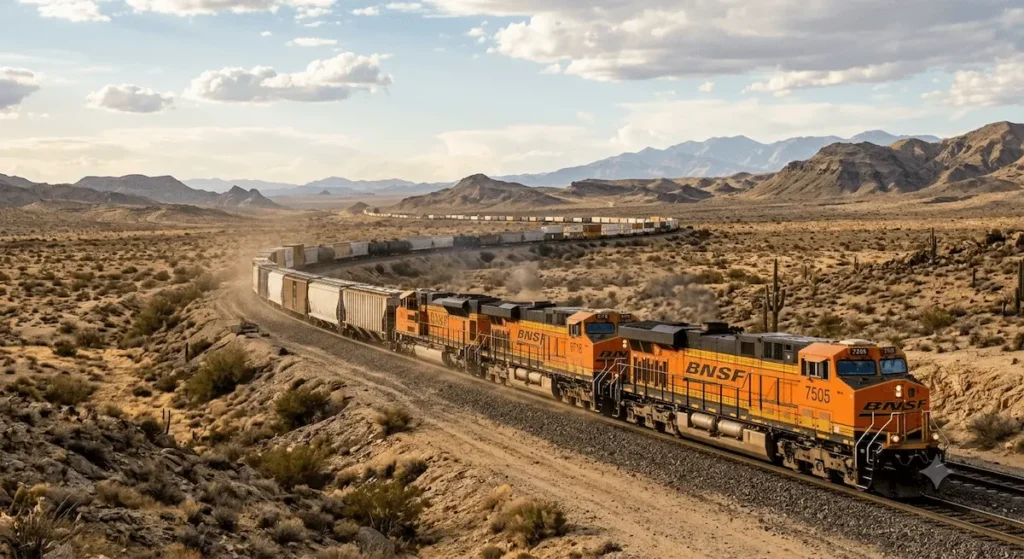
Railway safety based on a simple, robust and proven electro-free mechanical-pneumatic principle.
The 3D&FAT® (Derailment Detection & Automatic Train Braking Device) is a safety system developed by ALL RAIL SYSTEMS (ARS) to detect the onset of a derailment and automatically initiate the train’s pneumatic emergency braking system, reducing the distance travelled after the incident and minimizing its consequences.
Unlike systems based on electronic sensors, the 3D&FAT operates exclusively through mechanical and pneumatic principles, requiring neither electrical power nor onboard electronics or software.
Its design prioritizes reliability, mechanical simplicity and minimal maintenance. Over more than two decades, the system has continuously evolved through practical experience gained under real railway operating conditions, incorporating improvements aimed at increasing robustness, durability and operational reliability.
Understand how 3D&FAT works: In just two minutes, this video will help you understand how the 3D&FAT system works, from derailment detection to automatic activation of emergency braking, clearly and visually showing how this technology helps reduce the distance traveled and minimize the material, human and environmental consequences of a railway accident.
What is the 3D&FAT?
The 3D&FAT is a railway safety system designed to operate during the very first moments of a derailment.
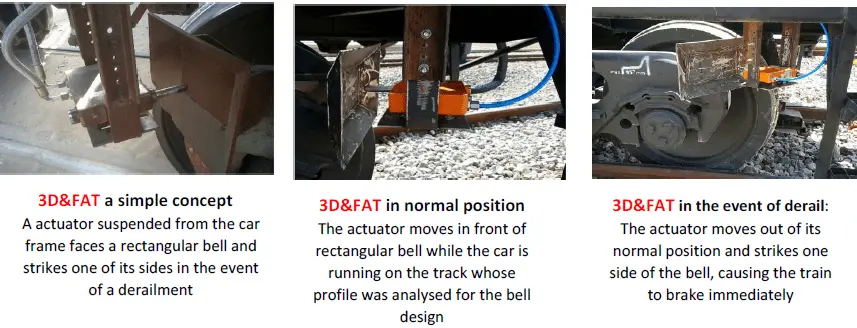
When a wheel leaves the rail, the relative movement between the bogie and the vehicle frame actuates a specially designed mechanical detector. This detector immediately generates a pneumatic signal that activates the VRDR valve, causing the train brake pipe to vent and automatically applying the emergency brake.
The entire process is completely autonomous, requiring no driver intervention and no electrical or electronic equipment.
The purpose of the 3D&FAT is not to prevent the initial derailment itself, but to minimize its consequences by reducing the distance travelled after the incident and significantly limiting damage to the track, rolling stock and transported cargo.
Main Features
- Entirely Mechanical and Pneumatic Operation.
- No Electrical Power Supply Required.
- No Onboard Electronics or Software.
- Robust Mechanical Detector with a Minimal Number of Moving Parts.
- Resettable VRDR Valve After Activation.
- Very Low Maintenance Requirements.
- High Resistance to Dust, Sand, Moisture and Vibrations.
- Engineering Adaptation for Each Vehicle Type.
- Technical Assistance and Training Throughout the Project.
- Protected Technology and Engineering Know-How.
How Does the 3D&FAT Work?
The operating principle is based on detecting the relative movement that occurs between the bogie and the vehicle frame whenever a wheel leaves the rail.
During normal operation, the detector remains aligned with a specially designed steel striker plate fixed to the bogie, maintaining the position established during the engineering adaptation process.
If a derailment occurs, this relative movement immediately changes the detector position and mechanically actuates the detection mechanism.
The detector then generates a pneumatic signal that activates the VRDR valve, causing the brake pipe to vent and automatically applying the train emergency brake.
The entire sequence takes place almost instantaneously and completely autonomously, without electrical power or driver intervention.
A Principle Based on Simplicity
One of the fundamental characteristics of the 3D&FAT is its exceptionally simple operating principle.
From the very beginning, the design philosophy has been to eliminate unnecessary components that could introduce failures, adjustments or maintenance problems associated with electronic equipment.
The detector operates through direct mechanical actuation, without batteries, sensors, wiring, software or external communication systems.
This simplicity is one of the main reasons behind the system’s outstanding reliability and long-term operational performance.
Designed for Extreme Operating Conditions
The 3D&FAT has been specifically developed for industrial and mining railways, where dust, sand, moisture, vibration and extreme temperatures represent a continuous challenge for equipment installed beneath railway vehicles.
The detector body is fully encapsulated using a special resin, creating an almost completely sealed assembly that prevents the ingress of moisture, dust and abrasive particles.
In addition, the detector incorporates specially designed sealing elements around the through shaft, preventing sand and dust from entering the internal operating chamber.
These improvements are the direct result of many years of practical operating experience and continuous product development.
Stopping a Runaway Disaster
Through a clear and accessible visual explanation, this video presents how the 3D&FAT system works, its main components, and the role it plays in improving railway safety.
The Detector and the VRDR Relay Valve
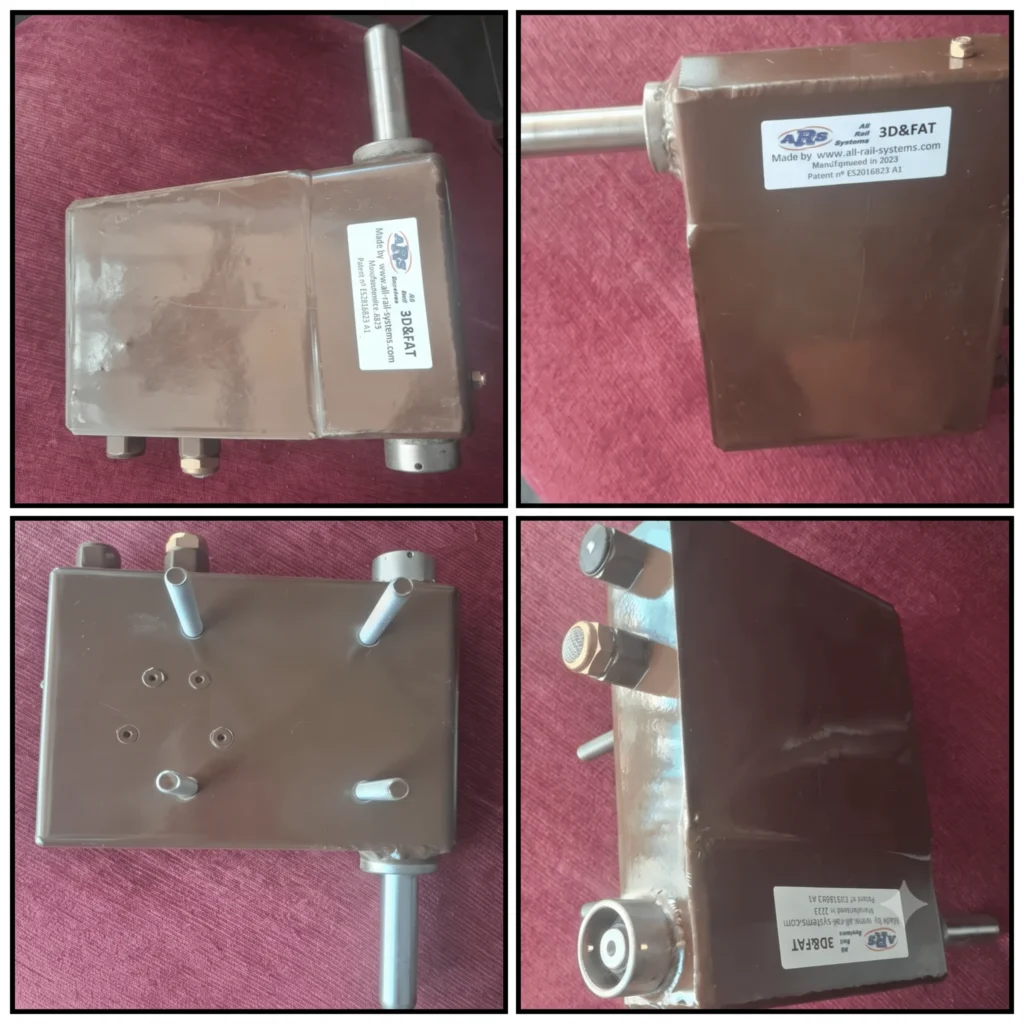
The detector is the component responsible for converting the mechanical displacement produced during a derailment into a pneumatic control signal.
This signal actuates the VRDR (Derailment Detection Relay Valve), which automatically vents the train brake pipe and initiates the emergency brake application throughout the train.
Following an activation, the detector can be manually reset by returning its actuating rod to its normal operating position, once the vehicle has been inspected and the cause of the derailment has been identified and corrected.
The simplicity of the assembly, together with its very limited number of moving parts and the absence of onboard electronics, contributes significantly to the outstanding reliability of the system.
The detector incorporates patented technical solutions developed by ALL RAIL SYSTEMS through many years of experience under real railway operating conditions.
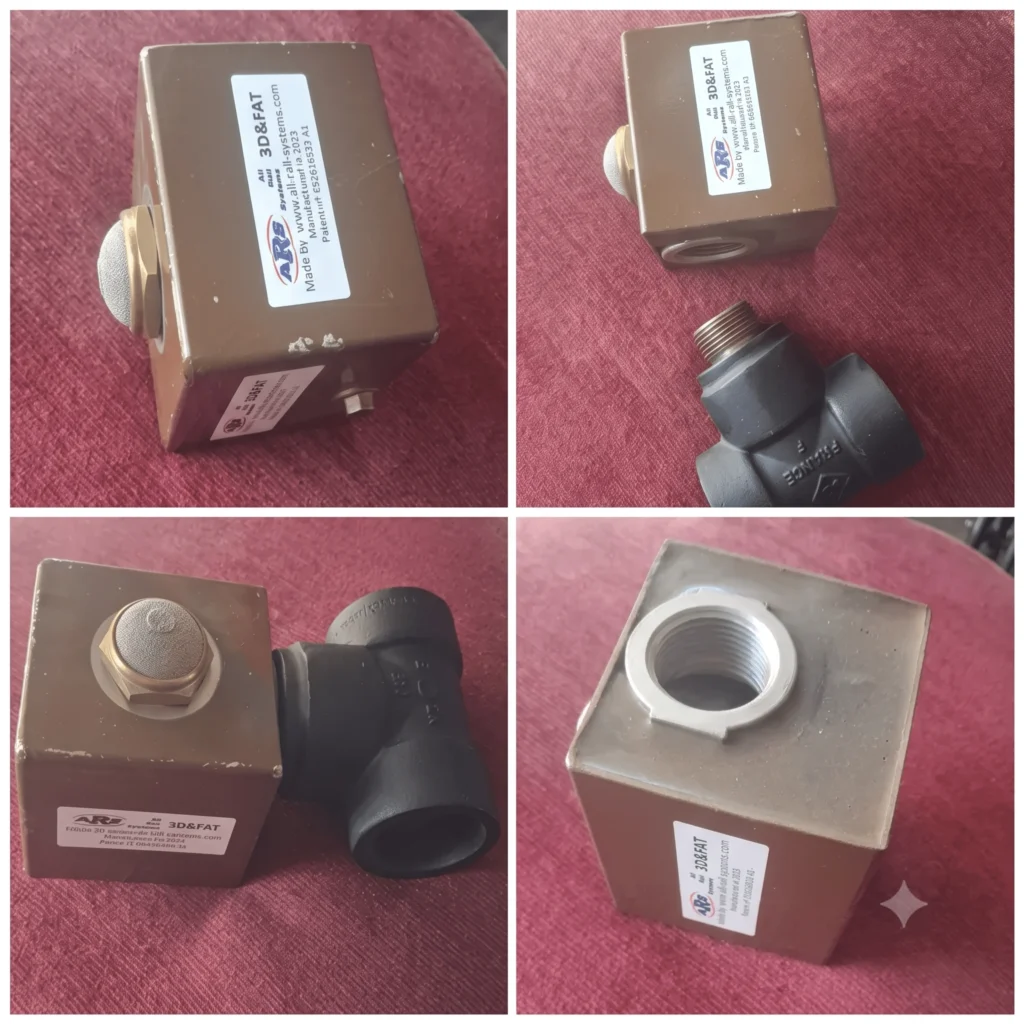
Installation and Adjustment
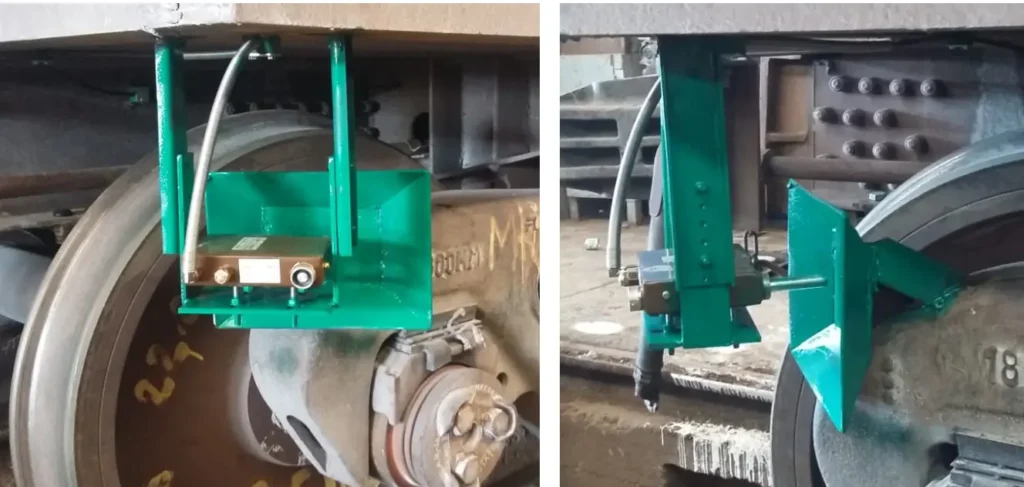
The detector is mounted on an adjustable support that allows precise positioning relative to the striker plate attached to the bogie.
The correct geometry between these two components is essential to ensure that the system reacts only to movements associated with an actual derailment.
For this reason, every installation is carried out using dedicated templates, dimensional specifications and installation procedures established by ARS.
Whenever bogies or mounting supports are replaced or repaired, the detector alignment and adjustment must be checked to maintain proper operation.
Engineering Adaptation
Every 3D&FAT installation is treated as a dedicated engineering project.
Before implementation, ARS carefully analyses factors such as:
- Bogie Geometry.
- Suspension Characteristics.
- Vehicle Frame Configuration.
- Operating Conditions.
- Relative Movement Between the Bogie and the Vehicle Frame.
- Track Characteristics.
- Minimum Curve Radius.
The objective is to ensure that the detector responds only to movements associated with a genuine derailment while avoiding unwanted activations during normal railway operation.
Dynamic Testing
Whenever the system is applied to a new type of vehicle, ARS carries out dedicated dynamic studies.
During these tests, the relative movement between the bogie and the vehicle frame is measured under different operating conditions, both loaded and unloaded.
The information obtained allows ARS to determine the optimum detector position, striker plate geometry and operating tolerances for each specific application.
Installation, Training and Technical Support
Our commitment does not end with equipment delivery.
Throughout the project ARS provides:
- Installation Supervision.
- Component Adjustment.
- Functional Testing.
- Personnel Training.
- Commissioning Assistance.
- After-Sales Technical Support.
Correct installation and compliance with the engineering specifications are essential to ensure maximum system reliability throughout its service life.lación y el mantenimiento de las posiciones definidas durante el estudio de ingeniería constituyen factores esenciales para garantizar la máxima fiabilidad del sistema.
Operating Experience
The 3D&FAT has continuously evolved over more than twenty years through practical operating experience gained under real service conditions.
Each new installation has contributed to improving detector robustness, installation procedures and maintenance methods, while preserving the original design philosophy of a simple, highly reliable mechanical-pneumatic safety system.
System Advantages
- Immediate Automatic Response.
- Completely Independent of Electrical Power.
- No Onboard Electronics.
- Highly Robust Mechanical Construction.
- Resettable VRDR Valve.
- Very Few Moving Parts.
- Minimal Maintenance Requirements.
- Excellent Environmental Resistance.
- Engineering Adaptation for Each Application.
- Technical Support Throughout the Entire Project.
- Significant Reduction of Potential Derailment Damage.
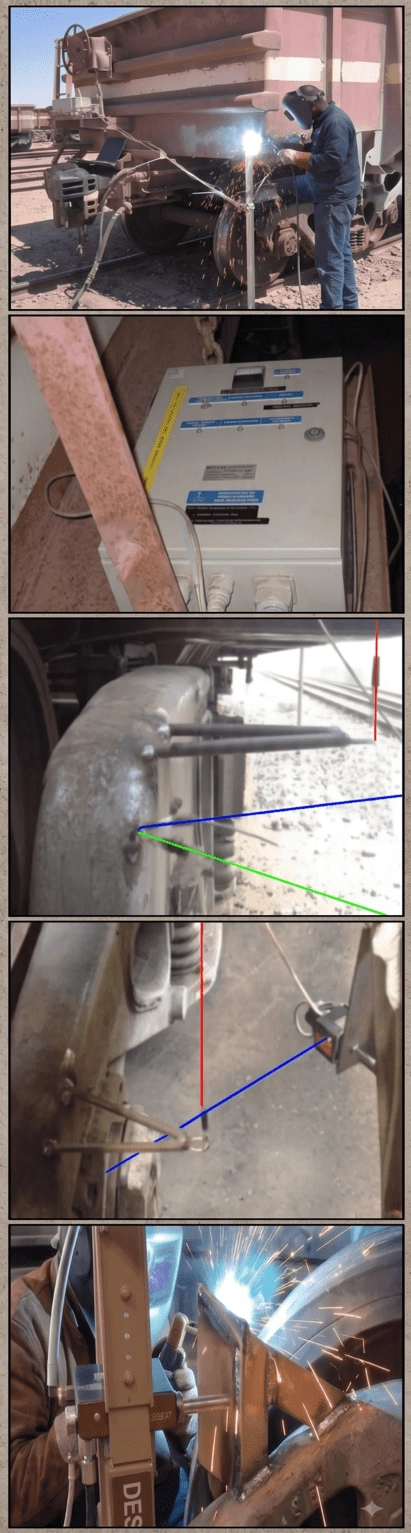
Derailments Induced with 3D&FAT
This video shows the controlled derailment tests carried out during the installation of the 3D&FAT system, demonstrating under real-world conditions the rapid activation of the automatic braking system and its effectiveness in limiting the consequences of a train accident.
Applications
The 3D&FAT has been primarily designed for freight railway vehicles operating under demanding service conditions, where early derailment detection can significantly reduce the consequences of an accident.
Typical applications include:
- Mining Railways.
- Freight Rail Transport.
- Heavy-Haul Trains.
- Steel Industry Transport.
- Ore Transportation.
- Bulk Material Transport.
- Industrial Railways.
Every project is individually evaluated by ARS to determine its technical feasibility and define the most suitable configuration for each vehicle and railway network.ado por ARS para verificar su viabilidad técnica y definir la configuración más adecuada para cada vehículo y cada red ferroviaria. previamente analizado por ALL RAIL SYSTEMS con objeto de verificar su viabilidad técnica y definir la configuración más adecuada para cada tipo de vehículo y condiciones de explotación.
Our Commitment
At ALL RAIL SYSTEMS, we believe that a railway safety system is far more than a piece of equipment.
Our commitment covers the entire project, including preliminary engineering, vehicle adaptation, installation design, personnel training, installation supervision and long-term technical support.
We do not simply supply equipment—we develop engineering solutions tailored to each individual railway application.
Contact Us
If you would like to evaluate the suitability of the 3D&FAT for your railway fleet or require additional technical information, our engineering team will be pleased to analyse your application and propose the most appropriate solution.
ALL RAIL SYSTEMS
Engineering for Railway Safety